
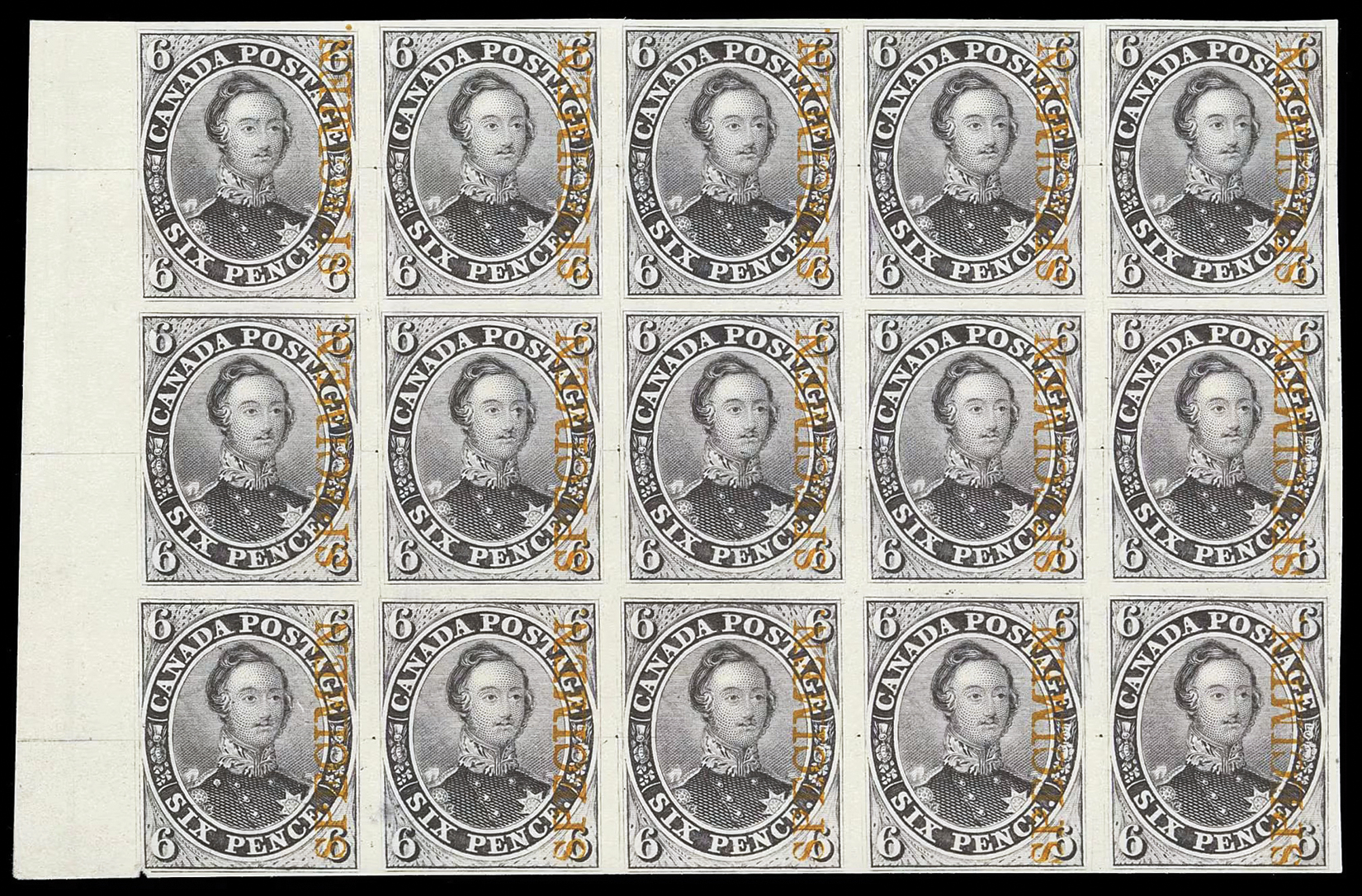
The story of Canada’s first postage stamps is often told through two iconic issues, the Three-Penny Beaver and the rare Twelve-Pence Black. Yet a third stamp, issued alongside them on April 23, 1851, quietly completes the picture.
The Six-Pence Consort, bearing a portrait of Prince Albert, played a crucial role in the postal system of the young Province of Canada, particularly in handling cross-border mail to the United States at a time of growing trade and communication.
Together with the Beaver and the Twelve-Pence Black, the stamp forms part of the famed Pence Issue, Canada’s first adhesive postage stamps and a landmark moment in the country’s postal history.
While it lacks the fame of its counterparts, the Six-Pence Consort offers its own compelling story, from its refined engraved portrait to its distinctive slate-violet colour and early production on laid paper.
Collectors today prize the stamp not only for its historical significance but also for the subtle variations that define its desirability, including paper type, margins and overall condition.
In this concluding instalment, we explore how the Six-Pence Consort completes Canada’s first stamp trio and why it remains an essential piece of the nation’s philatelic legacy. The story is featured in the latest issue of CSN released March 24.
To read this, and other articles, click here and subscribe today.