
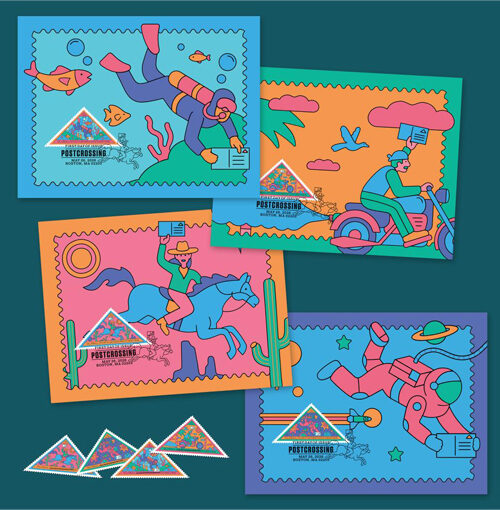
Collectors of postcards and postal history have another way to add the U.S. Postal Service’s 2026 Postcrossing issue to their collections following the release of four matching maximum cards.
The new cards pair the designs of the Postcrossing stamps with complementary postcard images. Each has a Postcrossing stamp attached to the picture side and is cancelled with the issue’s first-day postmark, creating the close relationship between stamp, cancellation and postcard illustration sought by maximum-card collectors.
Known as maxicards, maximum cards occupy an interesting crossover between philately and deltiology. Rather than simply placing a stamp on an unrelated postcard, collectors seek what is known as “maximum concordance,” in which the subjects of the card, stamp and cancellation correspond as closely as possible.
The cards follow the May 26 release in Boston of four triangular Postcrossing Global Forever stamps. Issued in panes of eight, the stamps pay the U.S. international letter or postcard rate and celebrate a project built around the traditional pleasure of receiving postcards through the mail.
Postcrossing began in 2005 as an online project that randomly connects participants around the world, allowing them to exchange postcards with people they otherwise would likely never meet. The project has since attracted more than 800,000 participants in over 200 countries and territories, with more than 87 million postcards sent.
For collectors, the addition of the maximum cards is a particularly fitting extension of the Postcrossing issue. The stamps celebrate international postcard exchange, while the new cards bring the postcard itself directly into the philatelic product — combining stamps, postmarks and picture postcards in a format that connects several collecting interests.
For more details, click here.