
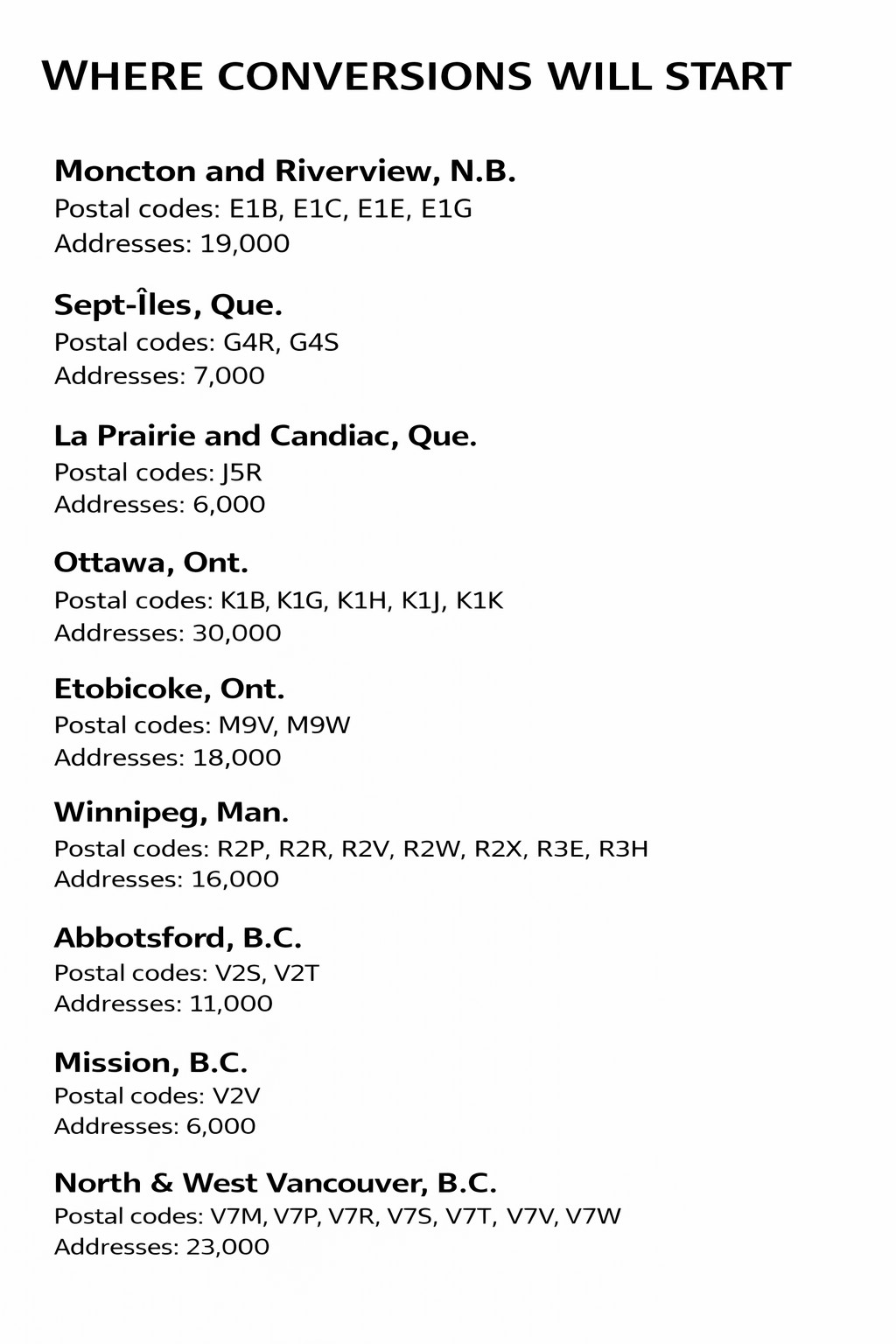
Canada Post will begin the first phase of a nationwide shift to community mailbox delivery in late 2026 and early 2027, with about 136,000 addresses in selected communities set to transition from door-to-door service.
According to an April 16 press release, Canada Post says the initial rollout will affect parts of Moncton and Riverview, N.B.; Sept-Îles, Que.; La Prairie and Candiac, Que.; Ottawa and Etobicoke, Ont.; Winnipeg, Man.; and Abbotsford, Mission and the North Shore municipalities in British Columbia. See full list following the end of this story.
The move is part of a broader, multi-year transformation plan aimed at restoring the long-term viability of Canada Post as it adapts to declining letter-mail volumes, changing customer behaviour and ongoing financial pressures. The Corporation says the plan is designed to strengthen the postal system, support Canadian businesses and ensure it can continue operating without becoming a recurring burden on taxpayers.
Central to the transformation are two key initiatives now underway: converting the remaining door-to-door addresses to community mailboxes and modernizing the retail post office network.
The changes come amid ongoing labour developments between Canada Post and the Canadian Union of Postal Workers. The Corporation says ratification voting on tentative agreements reached last December will begin April 20 and continue through May 30, 2026.
The proposed agreements include wage increases, enhanced benefits and the introduction of a weekend parcel delivery model. Union members in both the Urban and Rural and Suburban Mail Carrier bargaining units will vote by confidential ballot on whether to accept the agreements.
Canada Post also noted the union will conduct a strike vote during the same period, as required under the Canada Labour Code. Both sides have agreed there will be no strike or lockout activity while the ratification process is underway. Results will be released once ballots are counted.
The Corporation said the tentative agreements support its broader transformation plan, with a focus on improving service consistency, maintaining job security and pension protections, and meeting evolving customer expectations following two years of labour uncertainty.
Overall, about four million Canadian addresses are expected to be converted to community mailboxes over the next five years, with different regions transitioning in phases.
For stamp collectors and postal historians, the changes may carry practical implications. Community mailboxes, now used by nearly three-quarters of Canadian addresses, offer secure, centralized delivery with locked compartments for mail and parcels.
Canada Post says more than 80 per cent of parcels will fit within mailbox compartments, while oversized or signature-required items will continue to be delivered to the door or held at a nearby post office.
Collectors who regularly receive auction lots, new issues or cover mailings may need to adjust to the new system, particularly in terms of pickup routines and delivery timing.
The Corporation notes community mailboxes have been part of Canada’s delivery network for more than 40 years and are designed to provide consistent, secure access.
Canada Post also emphasized accommodations will remain available for customers with accessibility needs through its Delivery Accommodation Program, which can include modified mailbox access or, in some cases, continued home delivery.
Alongside delivery changes, Canada Post is reviewing its retail network, citing a 30 per cent decline in in-store revenue since 2021. The modernization effort will begin with market reviews in urban and suburban areas while maintaining service in rural, remote and Indigenous communities.
Canada Post says it will continue consulting with communities, customers, employees and other stakeholders as the transformation plan moves forward.
Where conversions will start:
The Corporation is initiating discussions with the following 13 communities as it prepares to begin converting approximately 136,000 addresses from door-to-door delivery to community mailboxes in late 2026 and early 2027:
| Community | Addresses with postal codes beginning with… | Number of addresses* |
| Moncton and Riverview, N.B. | E1B, E1C, E1E, E1G | 19,000 |
| Sept-Îles, Que. | G4R, G4S | 7,000 |
| La Prairie and Candiac, Que. | J5R | 6,000 |
| Ottawa, Ont. | K1B, K1G, K1H, K1J, K1K | 30,000 |
| Etobicoke, Ont. | M9V, M9W | 18,000 |
| Winnipeg, Man. | R2P, R2R, R2V, R2W, R2X, R3E, R3H | 16,000 |
| Abbotsford, B.C. | V2S, V2T | 11,000 |
| Mission, B.C. | V2V | 6,000 |
| City of North Vancouver, District of North Vancouver and West Vancouver, B.C. | V7M, V7P, V7R, V7S, V7T, V7V, V7W | 23,000 |