

Canada Post has issued a new Black History Month stamp set celebrating the early roots of hip-hop in Canada, marking the first time the Crown corporation has honoured Canadian hip-hop artists on postage stamps.
Unveiled Jan. 27 in Toronto, the issue features stamps dedicated to Maestro Fresh Wes, Michie Mee and the Montréal-based group Muzion, three pioneering acts whose work helped define Canadian hip-hop during the late 1980s and 1990s.
Issued as a set of six Permanent stamps, the designs draw heavily on the visual language of early hip-hop culture. Bold typography, varied type sizes and layered graphic elements echo the rhythmic structure of the music, while the use of fluorescent inks, metallic silver accents, black duotone portraits and contrasting matte and gloss varnishes gives the stamps a vivid, contemporary look. Under black light, fluorescent elements glow, reinforcing the energetic aesthetic associated with the genre’s formative years.
The stamps were designed by Noël Nanton and Nadia Molinari of typotherapy and printed by Lowe-Martin. Each artist is also featured on an Official First Day Cover, with Toronto serving as the cancel site for Maestro Fresh Wes and Michie Mee, and Montréal for Muzion.
Canada Post has issued Black History Month stamps annually since 2009, recognizing the achievements and contributions of Black Canadians. This year’s issue expands that tradition by highlighting hip-hop’s role as a powerful cultural force and form of expression within Canada’s Black communities.
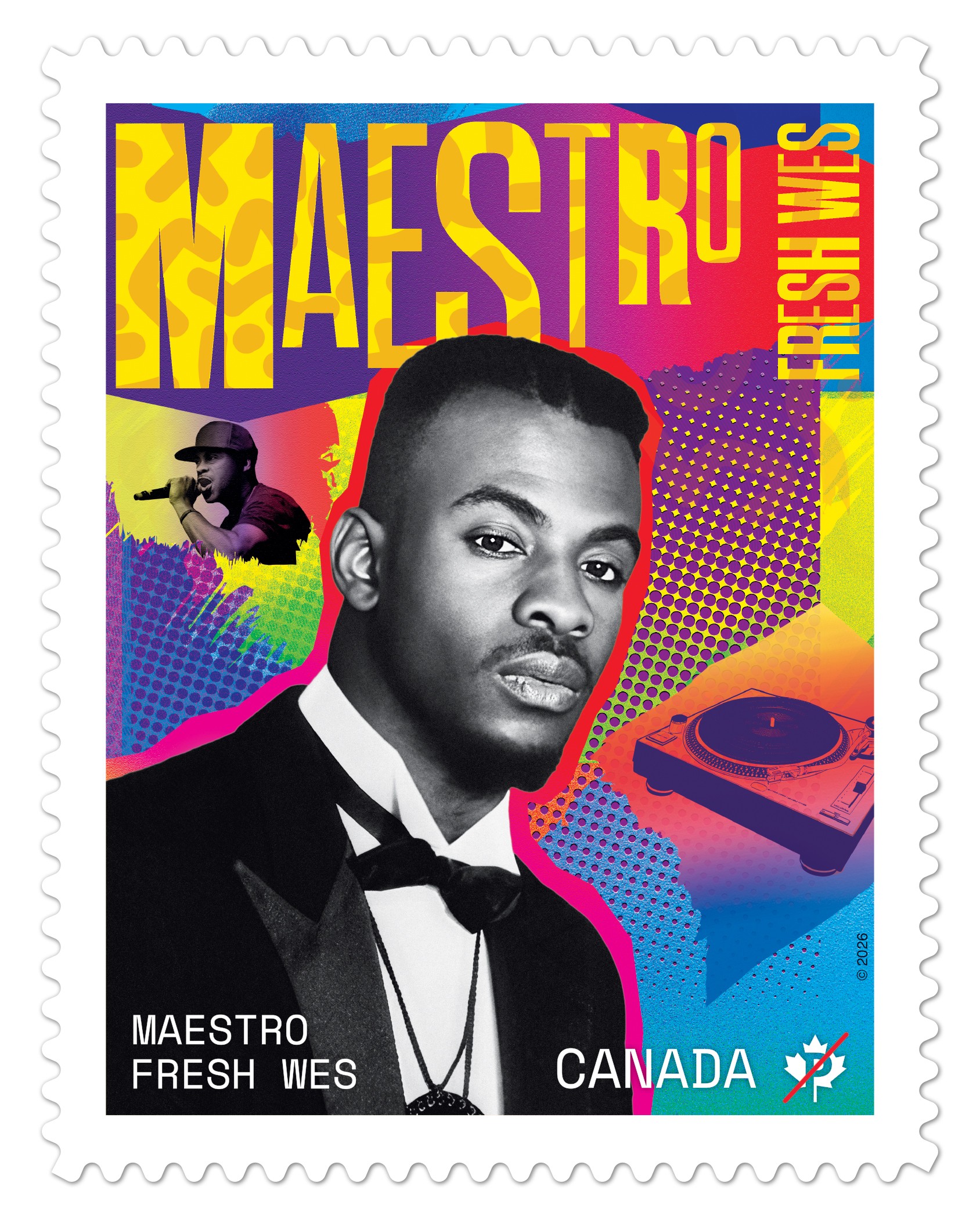
MAESTRO-STAMP
Maestro Fresh Wes, born Wesley Williams in Toronto in 1968, is widely regarded as the first Canadian MC to achieve mainstream success. His 1989 debut album Symphony in Effect included the groundbreaking single “Let Your Backbone Slide,” which became the first Canadian rap song to go gold, while the album itself went platinum. In 1991, the JUNO Awards introduced the Best Rap Recording category, with Symphony in Effect earning the inaugural honour. Over his career, Maestro has released nine studio albums and later expanded into writing, acting and motivational speaking. In 2024, he was inducted into the Canadian Music Hall of Fame and received the Governor General’s Performing Arts Award for Lifetime Artistic Achievement.
Michie Mee, born Michelle McCullock in 1970, emerged in the late 1980s as one of Canada’s most influential and boundary-pushing hip-hop artists. Her debut single, “Elements of Style,” released in 1987, brought immediate attention, and she soon became the first Canadian MC to sign with a major U.S. label. Her 1991 album Jamaican Funk – Canadian Style blended rap with dancehall and reggae influences, reflecting her Jamaican heritage. Later in the decade, she joined the group Raggadeath, known for combining reggae with heavy metal.
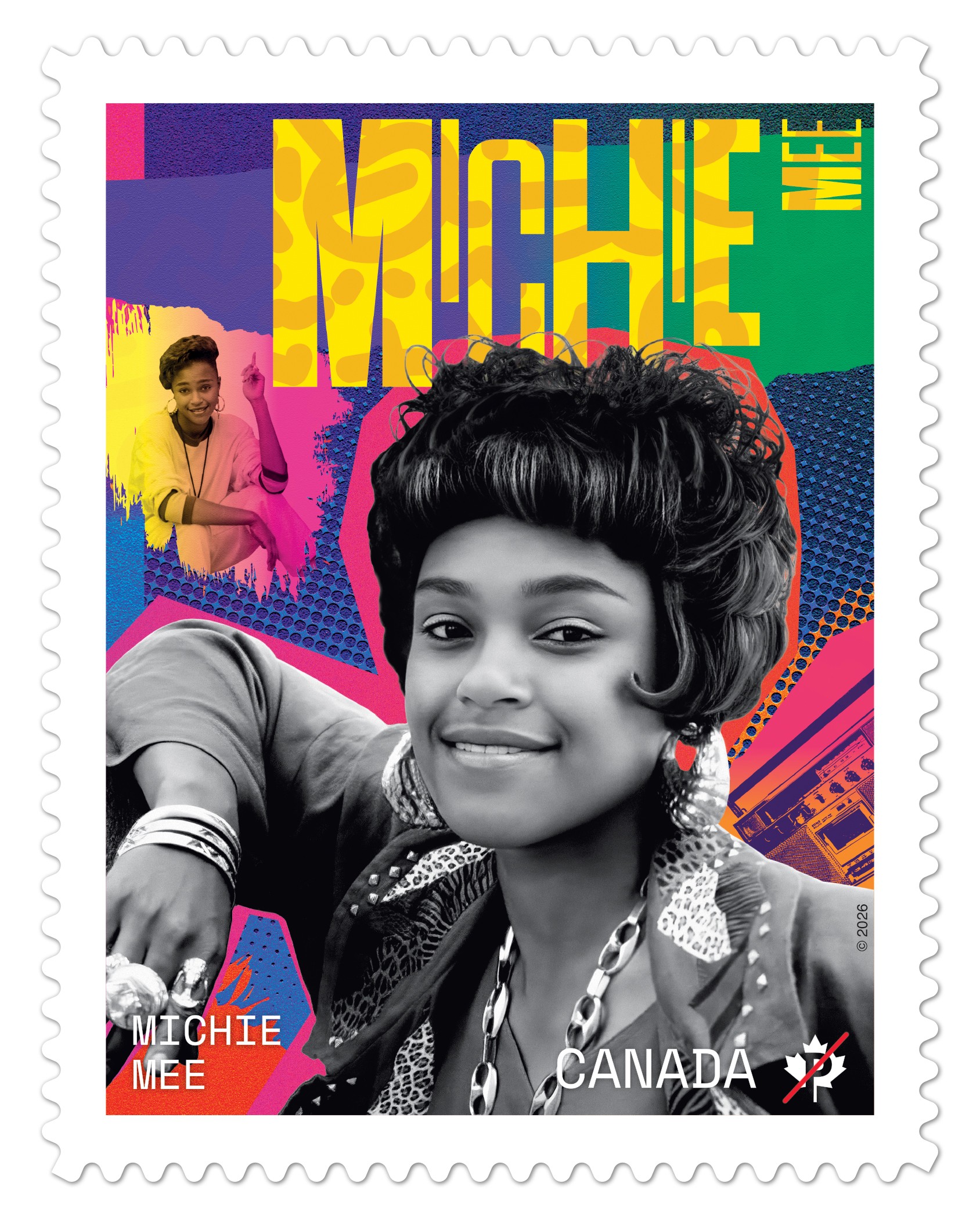
MICHIE-STAMP
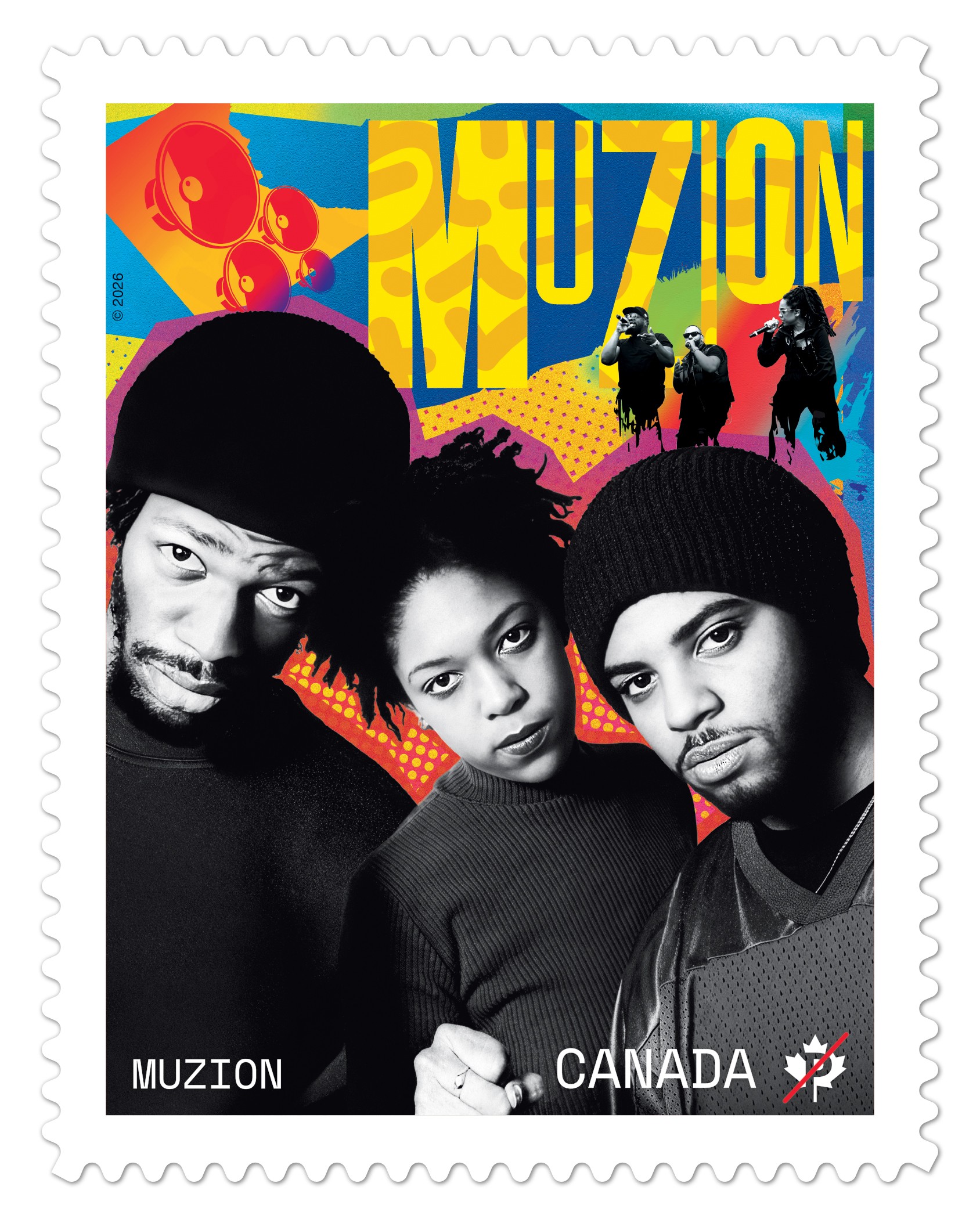
MUZION-STAMP
Muzion, formed in Montréal in 1996, brought a multilingual voice to Canadian hip-hop, incorporating French, English and Haitian Creole into their music. The trio – J.Kyll (Jenny Salgado), Imposs (Stanley Salgado) and Dramatik (Jocelyn Bruno) – released two acclaimed albums, Mentalité moune morne… (Ils n’ont pas compris) in 1999 and J’rêvolutionne in 2002, both of which earned Félix Awards for Hip-Hop Album of the Year. Their 2004 single “La vi ti nèg” won a Canadian Urban Music Award. Beyond music, Muzion’s work has been credited with empowering marginalized communities and reinforcing the role of Haitian culture within Quebec and Canadian society.
Photographs used in the stamp designs include portraits by Wellington Williams (Maestro Fresh Wes), Getty Images (Michie Mee) and Brigitte Henry (Muzion), with background images by Edward James Rissling, Rick McGinnis and Marie-Michèle Bouchard.